Domestic Workers and Social Insurance
Work in progress
Work in progress
Voluntary enrollment is the standard first step toward a mandatory regime for workers who are hard to reach. This project asks how much of the gap it actually closes.
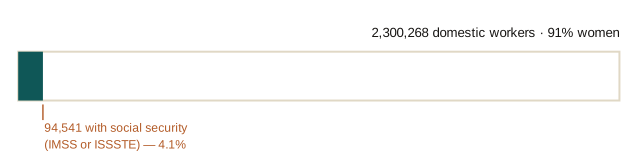
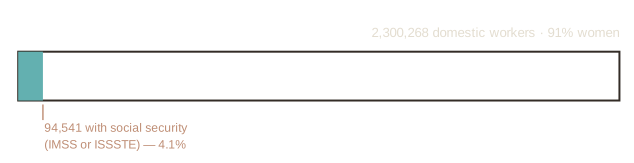
Domestic workers in Mexico and the share with social security, 2026-Q2. Own calculation from ENOE microdata using the survey’s complex design; coverage is affiliation to IMSS or ISSSTE.
What the project does
Domestic workers provide essential services for private households, yet they rarely have access to labor rights and protections and show one of the highest informality rates in the economy. Mexico has roughly 2.3 million domestic workers, with sharp occupational segregation by gender: more than 90% are women.
I study the 2019 change in Mexican federal labor law that extended access to social insurance benefits to domestic workers. IMSS had launched a voluntary enrollment pilot that April, and the reform set it on a path toward a mandatory regime. I use the quarterly labor force survey to trace its effect on observed labor outcomes.
Why it matters for policy
Mandating coverage for workers whose employer is a household raises enforcement problems that do not arise inside firms. Whether a voluntary pilot builds enough take-up to make a mandate feasible is the practical question facing IMSS, and the answer carries over to other occupations with atomized employers.